In 2025 a playful — and at times unsettling — social media phenomenon took hold: ordinary people posting hyper-realistic images that made it look as if they’d bumped into celebrities and casually snapped a selfie together.
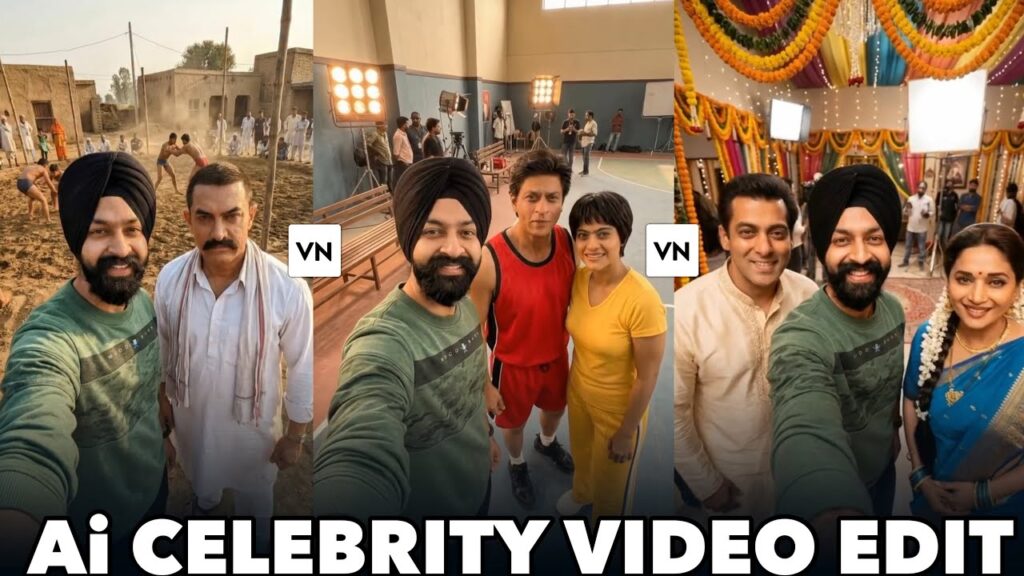
Unlike polished red-carpet photos, these images intentionally mimic imperfect, spur-of-the-moment phone pictures: off-centre framing, awkward smiles, motion blur and natural lighting that tricks the eye into believing a chance meeting really happened.
What began as a lighthearted way for fans to imagine meeting their idols quickly became one of the clearest examples yet of how generative AI can blur the line between fun and fakery. Aura AI+1
Viral AI Celebrity Selfie Prompt
Create a realistic, high-fidelity (8K) image based on the attached reference photo. Maintain the exact facial features, skin tone, bone structure, hairstyle, and expression of the attached person, with no alteration or face swapping.
The attached person is taking a selfie with [Sharukh Khan, standing at [Set/Raone. Crew members are adjusting internal lighting and equipment, with cables and gear visible. Directors and managers are standing behind, discussing the next take.
Viral AI Celebrity Selfie Video Prompt
POV: The guy takes a selfie and walks to the next set with a smile, in excitement while vlogging while he holds the camera which is locked on his face, and takes a selfie again. Crew working on set in the background. No Talking
How the trend spread — accessible tools, shareable formats
The mechanics were simple, and that’s what made the trend explosive. Throughout 2025 multiple consumer image-generation and photo-editing tools added fast, user-friendly modes specifically built to create realistic portraits and “selfie-style” composites.
These tools let users upload one or more personal photos, pick a public figure (or describe them in a prompt), and apply editing or generation steps that blended the user and celebrity into a single scene with convincing lighting, perspective and facial interaction.
Tech giants also pushed model improvements — for example, Google’s Gemini Nano Banana family expanded the fidelity and speed of on-device image editing, and its editors began embedding invisible AI watermarks to mark generated content. Those upgrades made lifelike celebrity-selfie outputs easier, faster and cheaper than ever before. Gemini+1
Social platforms fuelled virality. Short-form video formats and image carousels are perfect for “before/after” reveals and comedic captions; users posted step-by-step reels showing the prompt, the original photo and the finished composite.
Hashtags like #MetMyIdol, #AICelebSelfie and regional variants trended simultaneously in markets from Seoul to Mumbai to Los Angeles. In some cases creators deliberately leaned into obvious satire; in others the tone was “look what I made,” and many viewers shared and re-posted for the novelty alone. Guides and tutorials from creators and small startups explained how to craft realistic prompts, select reference images and do light retouching for the most convincing result — so even non-technical users could participate within minutes. Kapwing+1
Why people loved it — fandom, identity, and performance
At its heart the trend was a form of fandom and digital performance: an inexpensive way for people to visualize a moment they’d fantasized about for years. Celebrities occupy an outsized cultural role in 2025; a realistic selfie with a star functions like a shared inside joke across friend groups and follower lists. For many creators, the images were aspirational, playful, or simply a creative collage to spice up feeds. The selfie format also offers strong social currency — quick to consume, instantly shareable, and easily commented on — which amplified reach and made certain images feel like instant trophies. Hyperallergic
There’s also an element of identity play. Social media has long allowed people to craft an idealized self; AI celebrity selfies are another tool in that kit. For some, the composite selfie is a tongue-in-cheek expression of fandom (a digital souvenir). For others, it’s a performance aimed at boosting engagement or building a persona. That mix of sincerity and performative intent helps explain why the trend showed up across cultural contexts and age groups. Aura AI
Real examples and cultural variations
While the meme spread globally, local flavors emerged quickly. In India, for instance, creators began producing AI selfies with Bollywood stars and regional celebrities; a number of viral threads showed users “posing” with actors like Ranveer Singh or Shraddha Kapoor, with the creator sharing the specific prompt used to produce the image. Similar patterns emerged in other markets: K-pop idol transformations, footballer selfies in sports circles, and political figure composites in newsfeeds (the latter often prompting platform moderation). These examples underline how a single technical capability was adapted to fit diverse cultural interests. Hindustan Times+1
The darker side: privacy, consent and misuse
Fun as it was, the trend exposed real harms and risks. Experts and outlets warned of multiple problems tied to uploading personal photos and generating likenesses of public figures. First, uploading private photos to cloud services raises data-security concerns: images can be exposed in breaches, retained by companies for re-training, or used for targeted manipulation. Second, using a celebrity’s likeness without consent can infringe on publicity rights or lead to defamation if the generated content places the celebrity in compromising or misleading contexts. And third, such realistic composites increase the difficulty of distinguishing authentic moments from fabrications, raising the stakes for misinformation and social engineering. Those concerns led some public figures to publicly condemn or request removal of AI-generated images exploiting their likenesses. www.ndtv.com+2Forbes India+2
Beyond legal and privacy issues, there are psychological and social harms. Deeply realistic composites can fuel impostor content (someone pretending a private relationship or event occurred), enable harassment (non-consensual sexualized imagery or manipulated context), and erode trust in visual evidence. Scholars argue these phenomena shift the social contract around images: where a photograph once carried presumptive credibility, audiences now must decide whether to trust, verify, or dismiss images — a cognitive burden that affects discourse, journalism and personal relationships. Tencent Cloud+1
Platform and model responses
Tech companies and platforms moved quickly to address obvious misuse while preserving creative uses. Some image-generation providers implemented visible or invisible watermarks (SynthID-style markers), explicit content policies that ban sexualized deepfakes and impersonations, and user controls for deleting uploaded reference photos. Platforms such as Instagram and X refined community guidelines to flag or remove manipulated images that could deceive viewers or harm individuals. At the same time, many model providers emphasized safety features and content-usage disclaimers, while also giving creators guides on attribution and ethical prompting. These responses were uneven — enforcement remains a complex interplay of automated detection, human review and legal jurisdiction — but they signalled growing industry awareness. Google AI Studio+1
Legal and ethical landscape — not yet settled
Legal rules around using a celebrity’s likeness differ widely by country and context. In many jurisdictions publicity rights and defamation laws can be invoked if a generated image is commercialized or falsely alleges endorsement, but there are large gaps when the image is posted for entertainment on social feeds. Legislators in several countries were already debating updates to digital-image laws in 2025, focusing on disclosure requirements, liability for platforms, and penalties for non-consensual explicit deepfakes. Ethicists also pushed for norms: transparent labeling, opt-out mechanisms for public figures, and robust data-handling rules for companies that process user photos. Until formal regulation catches up, the legal gray zone leaves creators, platforms and celebrities negotiating acceptable behaviour in public. Forbes India+1
Practical advice: how to join the trend responsibly
If you want to try the AI celebrity selfie trend but avoid pitfalls, a few practical precautions reduce harm:
- Use trustworthy tools and read the privacy policy. Prefer services that explain how they store or delete your uploads and that offer clear data-retention controls. If a tool keeps images indefinitely or claims broad re-use rights, don’t upload sensitive photos. www.ndtv.com+1
- Avoid sexualized or deceptive images. Don’t create or share images that sexualize someone without consent or that portray a public figure in an obviously false context (e.g., endorsing products or political positions). Those uses are ethically fraught and may be illegal. Forbes India
- Label your posts clearly. Add captions like “AI-generated” or use visible disclaimers to avoid misleading viewers — transparency builds audience trust and reduces confusion. Kaboompics Blog
- Respect platform rules and celebrity requests. If a public figure asks for content to be removed, comply. Platforms increasingly respond to takedown notices for non-consensual content. The Times of India
- Consider the social impact. Remember that even a single viral image can be reshared far beyond your original intent. Ask: will this joke harm or humiliate someone if it goes viral? If the answer is yes, don’t share it. Forbes India
Why this trend matters — beyond memes
AI celebrity selfies are more than a passing internet joke; they illustrate how generative models are transforming the texture of everyday media. The trend compressed several themes that will define our digital future in microcosm: the democratization of image production, the tension between creative play and consent, the limits of platform governance, and the need for new social norms around synthetic content. As the tools improve, the threshold for “believability” drops and the cultural implications deepen — not just for celebrity culture, but for institutions that rely on photo and video evidence (journalism, courts, personal reputations). Hyperallergic+1
Looking ahead — normalization, rules, and new aesthetics
A year into the craze, a few plausible futures are visible. One path leads to normalization: if platforms adopt widespread watermarking and users routinely label synthetic images, audiences could learn to parse feeds with healthy skepticism. Another path is stricter regulation: lawmakers could mandate disclosure, limit commercial exploitation of public-figure likenesses, and impose penalties for harmful manipulations. A third possibility is aesthetic evolution: creators may treat synthetic celebrity selfies as an accepted creative genre — like fan art — accompanied by community norms and explicit permissions. The real outcome will likely be a hybrid: incremental regulation, better detection and a mix of playful and contested uses. Google AI Studio+1
Conclusion — fun that forces a conversation
The Viral AI Celebrity Selfie Trend of 2025 was a technocultural Rorschach test: it revealed what people want from social media (connection, recognition, play), what companies can build quickly (convincing image tools), and where society still needs to catch up (law, ethics and digital literacy). For creators it offered a harmless bit of digital theatre; for celebrities it became another vector of image misuse; for platforms it was a headline and a headache. As synthetic media grows more sophisticated, the lessons of 2025 are clear: encourage creativity, defend privacy, demand transparency, and — crucially — teach people how to tell an AI fantasy from a real moment.